



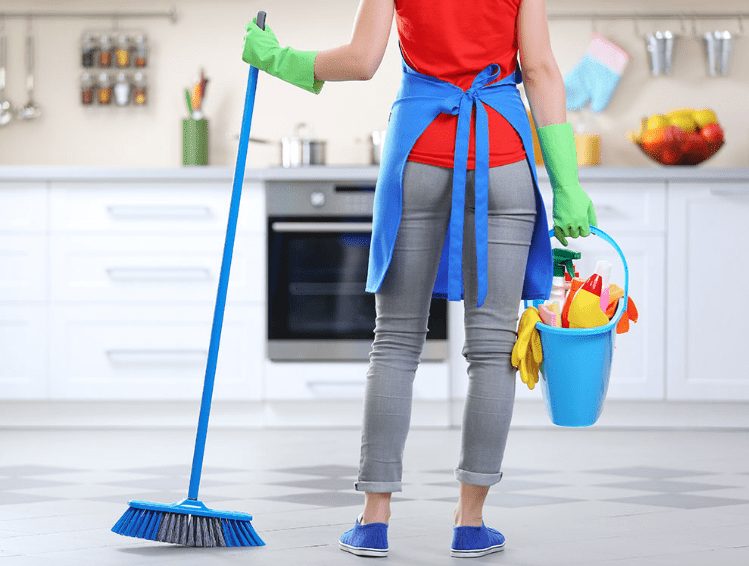
Most homes need a full clean every one to two weeks to stay at a healthy baseline. That’s the range health and cleaning experts point to for a typical household, and it’s also the cadence that keeps a home from ever reaching the point where cleaning feels like a project instead of a routine.
The right frequency for your home depends on a few specific factors: how many people live there, whether you have pets or young kids, whether anyone in the house deals with allergies or asthma, and how humid your climate runs. Here’s how to figure out where your home falls, using the guidance health and cleaning organizations actually publish.
What’s a normal cleaning frequency for a healthy household?
The American Cleaning Institute sets a baseline for what it calls a “normal routine” in a healthy household: weekly cleaning of bathrooms and kitchen surfaces, with bedding laundered every two weeks. That baseline covers the areas that build up fastest and matter most for day-to-day hygiene, which is why it’s the starting point most cleaning schedules are built around.
For a lot of households, that translates to a full clean of the whole home every one to two weeks, with kitchens and bathrooms getting the most frequent attention since they see the heaviest daily use. Floors, counters, and trash areas fall into that same weekly bucket. Living rooms, bedrooms, and less-trafficked areas can often stretch a little further between full cleans and still stay at that healthy baseline.
Within a single visit, the tasks split roughly two ways: things that need attention every time (floors, counters, bathroom fixtures, trash) and things that hold up fine on a longer rotation (baseboards, light fixtures, inside cabinets). A weekly or biweekly schedule is built to cover the first group every visit and rotate through the second group over a few visits, so nothing gets skipped for months at a stretch.
Does having kids, pets, or allergies change the schedule?
Yes, and the change is measurable. The Asthma and Allergy Foundation of America recommends vacuuming once or twice a week and washing bedding in hot water (130°F or higher) weekly to keep dust mite populations under control. Homes with pets add another layer: pet hair, dander, and tracked-in debris accumulate faster than in a pet-free home, so surfaces and floors need more frequent attention to stay at the same baseline.
If anyone in your home has allergies, asthma, or a compromised immune system, a weekly cadence for high-touch and high-allergen areas (floors, bedding, bathroom surfaces) makes a real difference in how the home feels day to day. Kids add a similar effect through higher mess volume and more frequent hand-to-surface contact.
Humidity plays a role too. AAFA notes that mold needs to be addressed as soon as it appears and again on a weekly basis to keep it from returning, and homes in humid climates tend to see mold and mildew develop faster in bathrooms, kitchens, and laundry areas than homes in drier regions. That’s a strong argument for keeping those specific rooms on the tighter end of the weekly range rather than letting them slide to biweekly.
What’s the difference between routine cleaning and deep cleaning frequency?
Routine cleaning and deep cleaning solve different problems, and they run on different clocks. Routine cleaning, the weekly or biweekly pass, handles surface dirt, dust, and daily buildup before it accumulates. Deep cleaning goes further: baseboards, inside appliances, window tracks, grout, and other areas that a standard visit typically skips over.
A good rule of thumb is a deep clean every three to six months, layered on top of a consistent routine cleaning schedule. Relying on occasional deep cleans alone, with long gaps in between, tends to produce a home that feels clean right after service and noticeably less clean by the following week, since nothing is maintaining the baseline in the time between visits.
The two work best together. Routine visits keep the everyday surfaces at that healthy baseline, while deep cleans handle the buildup that only shows up over months: grime in grout lines, dust behind and under furniture, buildup inside the oven or refrigerator. A home on a weekly or biweekly routine schedule generally needs less from each deep clean, since less has accumulated by the time it happens.
What happens if you clean less often than recommended?
Dust, allergens, and daily buildup accumulate on their own timeline regardless of your schedule. Stretching the gap between cleanings gives all of it more time to settle into carpets, bedding, air vents, and upholstery, where it’s harder to remove and has more time to affect indoor air quality. A home that gets a full clean every three or four weeks instead of every one or two will typically need more time and more intensive work to bring back to baseline each time, since more has built up in the gap.
Dust mites in particular thrive on time. They feed on skin cells that shed continuously and reproduce quickly in bedding and upholstery that goes untouched for weeks. AAFA’s weekly bedding-wash recommendation exists specifically because that reproduction cycle keeps running between cleanings, and a longer gap gives the population more time to grow before the next wash resets it.
This is part of why consistency matters more than any single cleaning session. A home cleaned thoroughly once a month, then left alone, ends up in a different place over time than a home that gets lighter, more frequent attention on a set schedule, even if the total cleaning time adds up to roughly the same over a year.
How does a recurring cleaning service fit into this?
A recurring service is built to match the cadence the experts above describe: someone shows up on a set schedule, every week or every two weeks, and handles the bathrooms, kitchen, floors, and high-touch surfaces before buildup has a chance to accumulate. That’s the same rhythm the American Cleaning Institute and AAFA both point to, just handled by someone else’s calendar instead of yours.
For households managing kids, pets, allergies, or simply a full schedule, that consistency is often the hardest part to maintain solo. Life gets busy, and the gap between cleanings stretches from one week to two, then from two weeks to a month, and the home ends up further from that healthy baseline than intended. A recurring house cleaning plan in Lakewood Ranch keeps a home at that baseline on autopilot, and it’s straightforward to layer in a deep clean every few months on top of it.
The right frequency can also change over time. A new pet, a new baby, a change in allergy symptoms, or a move to a more humid part of the house all shift what a household needs. A recurring plan makes that adjustment simple since it’s a conversation about changing the schedule, not a fresh decision every time.
If you’re not sure which frequency fits your household, a good starting point is a one-time clean to establish a baseline, then a look at how the home feels a week or two later. That’s usually enough information to tell whether weekly or biweekly is the right long-term fit.
Sources referenced: American Cleaning Institute, “Levels of Cleaning for Better Health”; Asthma and Allergy Foundation of America, “Control Indoor Allergens to Improve Indoor Air Quality”


- Cleaning Guides
Categories

Stay Updated!
We will send you info about our business