



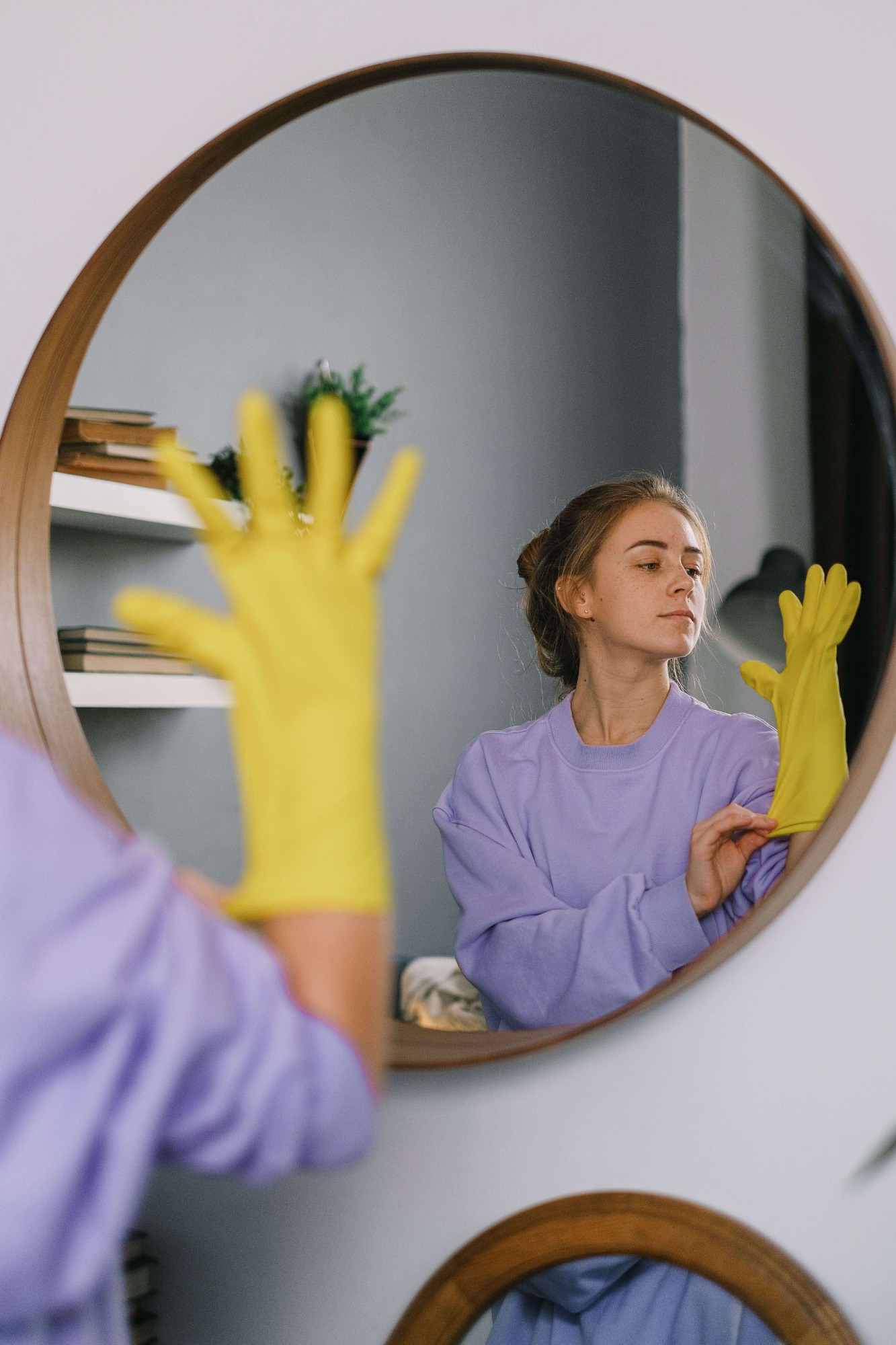
A clean home does more than look good. Regular cleaning removes the dust, allergens, and bacteria that build up in a living space over time, and it plays a measurable role in both physical and mental health. Homeowners who stick to a consistent cleaning schedule report fewer allergy symptoms, better sleep, and lower stress levels compared to those who clean only when the house starts to look messy.
Here’s what the research actually shows, and why the frequency of cleaning matters as much as the cleaning itself. The short version: a home cleaned once a month looks fine on cleaning day and drifts the rest of the time, while a home on a recurring schedule stays close to that same healthy baseline all year.
What Happens to Indoor Air Quality When a Home Isn’t Cleaned Regularly?
Every home accumulates dust, pet dander, pollen, and mold spores between cleanings. These particles settle into carpets, upholstery, bedding, and air vents, and they get stirred back into the air with normal daily activity like walking across a room or opening a closet.
The EPA’s guide to indoor air quality identifies mold, dust mites, and pet dander as common asthma triggers found in most homes, and recommends keeping surfaces clean and dry to reduce them. Left unaddressed, these biological contaminants keep circulating every time the HVAC system runs or someone sits on a couch. A home that gets a thorough clean once a month spends most of that month with allergen levels climbing back up.
Recurring cleaning interrupts that cycle before it builds. Instead of one deep reset followed by weeks of accumulation, allergen levels stay consistently lower because the buildup gets removed before it has time to spread through the air.
Humidity adds another layer to this. High indoor moisture is one of the main conditions mold needs to establish itself, and bathrooms, laundry rooms, and kitchens are especially prone to it. Wiping down damp surfaces and addressing moisture on a regular schedule keeps mold from getting a foothold, which is a far easier problem to prevent than to remove once it’s growing behind a shower curtain or under a sink.
Can Regular Cleaning Reduce Allergy and Asthma Symptoms?
Dust mites and mold are two of the most common indoor asthma triggers, and both thrive in homes that go too long between cleanings. Dust mites feed on skin cells that collect in bedding, carpet, and upholstery, and mold needs only moisture and an uncleaned surface to start growing in bathrooms, kitchens, and laundry areas.
Vacuuming carpets and upholstery, washing bedding on a regular basis, and wiping down bathroom and kitchen surfaces all reduce the food source and moisture these allergens need to grow. For households with kids, pets, or anyone managing asthma or seasonal allergies, this is a direct line between cleaning frequency and how well people breathe in their own home.
High-touch surfaces add to the picture. Kitchen counters, sink handles, cabinet pulls, and bathroom fixtures collect bacteria from food prep, hand contact, and general daily use. Left too long between cleanings, these surfaces become a steady source of germ transfer throughout the household. Routine disinfecting of these specific touchpoints, rather than a general once-over, is what actually keeps bacteria counts down between visits.
Does a Clean Home Actually Lower Stress Levels?
The connection between clutter and stress has been studied directly. Researchers at UCLA found that people who described their homes as cluttered or full of unfinished projects showed less healthy cortisol patterns throughout the day than those who described their homes as restorative, according to reporting from Psychology Today. Elevated cortisol is the body’s primary stress response, and sustained elevation is linked to fatigue, irritability, and difficulty concentrating.
The visual clutter itself plays a role too. A cluttered or dirty space forces the brain to process more competing information at once, which takes up mental bandwidth that would otherwise go toward focus and relaxation. Walking into a clean, orderly home removes that background noise. People consistently report feeling calmer and more in control in a space that’s been recently and thoroughly cleaned.
Sleep is part of this equation as well. A bedroom free of dust, allergens, and visual clutter supports a more restful environment, and clean bedding specifically reduces exposure to dust mites overnight, when people spend roughly a third of their day. Better sleep and lower stress reinforce each other, and both start with the physical condition of the home.
How Often Does a Home Need to Be Cleaned for Health Benefits?
This is where a lot of homeowners get the math wrong. A single deep clean feels great on the day it happens, but dust, allergens, and bacteria start rebuilding almost immediately. Within a week or two, a home that was deep cleaned once a month is back to accumulating the same triggers that caused problems in the first place.
Recurring cleaning on a weekly or biweekly schedule keeps allergen and bacteria levels at a consistently lower baseline year-round, rather than producing a sharp drop followed by weeks of buildup. That consistency is what actually protects respiratory health and keeps stress levels down. It’s the difference between a home that’s occasionally clean and one that’s reliably clean.
Picture two identical homes over a three-month period. One gets a single deep clean each month. The other gets a lighter clean every two weeks. The first home spends most of each month somewhere between “recently cleaned” and “overdue,” with allergen levels rising steadily until the next deep clean resets them. The second home never drifts far from its baseline. Even though the total cleaning time may be similar, the second household breathes cleaner air and lives in a lower-stress environment for a much larger share of the year.
Is Recurring Professional Cleaning Better Than Occasional Deep Cleaning?
Both have a place. A deep clean is useful for resetting a home that’s fallen behind or preparing for a specific event. For ongoing health benefits, recurring cleaning does more, because it prevents the buildup that a deep clean only resets. Professional cleaners also reach areas that get skipped in day-to-day tidying, like baseboards, vents, ceiling fans, and behind appliances, where dust and allergens concentrate the most and where most household cleaning routines never make it.
For households managing allergies, asthma, young kids, or just a demanding schedule, a recurring cleaning plan removes the guesswork and keeps the home at a healthier baseline without relying on someone finding the time and energy to deep clean every few weeks. It also takes the mental load off the household. Instead of tracking what needs attention and when, a recurring schedule handles it automatically, which is its own form of stress reduction on top of the physical health benefits.
Lakewood Ranch Clean offers recurring residential cleaning plans built around this exact idea: consistent, scheduled cleaning that keeps a home healthier between visits, not just tidier on the day someone shows up. If you’re ready to see what a consistent cleaning schedule can do for your home, get in touch to set up a plan that fits your household.


- Cleaning Guides
Categories

Stay Updated!
We will send you info about our business